
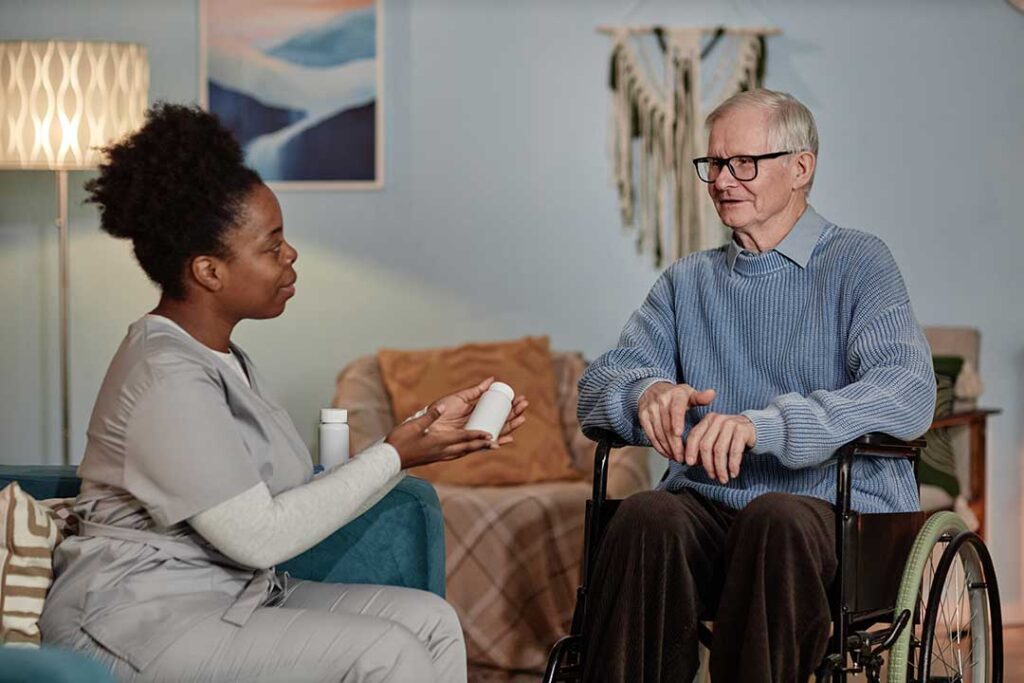
Falls are a leading safety concern for older adults in assisted living. They can cause fractures, head injuries, loss of confidence, and reduced mobility, but many falls are preventable when hazards, medications, health conditions, and daily routines are addressed together.
In Trappe, seasonal weather can add practical concerns. Wet entryways, tracked-in rain, snow, and ice may make walking surfaces hazardous, while changing daylight levels can affect visibility. Fall prevention works best as an ongoing part of daily care rather than a response only after an accident.
What are the most common causes of falls in assisted living?
Most falls result from a combination of personal and environmental factors. A resident may have balance changes, poor vision, or weakness, while the surrounding area may include a loose rug, poor lighting, or an obstacle in a walkway.
Common contributing factors include:
- Slippery floors or wet shoes
- Loose rugs, cords, and clutter
- Poor lighting near beds, bathrooms, and hallways
- Trouble seeing changes in floor height
- Weakness in the legs or reduced balance
- Dizziness when standing
- Foot pain or poorly fitting footwear
- Urgent trips to the bathroom
- Side effects from medications
- Walking without an appropriate cane, walker, or other aid
A fall can happen even in a familiar room. Residents and caregivers should look at both the person and the setting instead of assuming that age alone explains the risk.
How can an assisted living room be made safer?
A safe room should have clear walking paths, adequate lighting, and frequently used items within easy reach. The goal is to reduce unnecessary bending, stretching, climbing, or rushing.
Useful changes include:
- Keep a direct path between the bed, chair, bathroom, and doorway.
- Secure or remove small rugs, especially beside the bed and in the bathroom.
- Keep electrical cords against walls and out of walking areas.
- Place a lamp or light switch where it can be reached before getting out of bed.
- Use night-lights along the route to the bathroom.
- Store clothing, toiletries, and personal items between waist and shoulder height.
- Keep floors dry and promptly report leaks or spills.
- Avoid using chairs, stools, or rolling furniture as stepping platforms.
Furniture should be stable and easy to sit down on. A chair that is too low, too soft, or difficult to rise from may increase the chance of losing balance.
Why is the bathroom a high-risk area?
Bathrooms combine water, hard surfaces, tight spaces, and frequent changes in position. Standing from a toilet, stepping into a shower, or turning on a wet floor can all create fall risks.
Helpful precautions may include:
- Install properly positioned grab bars rather than relying on towel bars.
- Use a shower seat when standing for a long period is tiring or unsafe.
- Place nonslip surfaces where water commonly collects.
- Keep soap, towels, and clothing within easy reach.
- Use a raised toilet seat or toilet safety frame only when it has been properly selected and installed.
- Sit while drying or dressing if balance is unsteady.
- Avoid rushing to the bathroom, particularly at night.
A bath mat that slides across the floor can create danger rather than prevent it. Any mat should have a secure, nonslip backing and should not curl at the edges.
What footwear helps prevent falls?
The safest footwear is generally secure, well-fitting, and supportive. Shoes should stay firmly on the feet and have soles that provide traction without catching easily on the floor.
Good choices often include:
- Closed-back shoes or slippers
- Properly fitted footwear with nonslip soles
- Low, stable heels
- Fasteners that can be adjusted for swelling
Loose slippers, backless shoes, socks on smooth floors, and oversized footwear may increase risk. Shoes should be checked regularly for worn tread, stretched materials, or poor fit.
Residents who have foot pain, numbness, swelling, or changes in walking should mention those problems to a healthcare provider. Foot discomfort can lead to shuffling, uneven steps, or avoiding the use of a mobility aid.
How do medications and health conditions affect fall risk?
Dizziness, sleepiness, blurred vision, low blood pressure, and confusion can increase the chance of falling. These effects may come from prescription medications, over-the-counter products, or combinations of medicines.
Residents should not stop or change medication without medical guidance. Instead, a medication review can help identify whether a drug, dose, or timing may be contributing to unsteadiness. Extra attention may be needed after a new prescription or a dosage change.
Health conditions that may affect fall risk include:
- Arthritis and joint pain
- Muscle weakness
- Parkinson’s disease
- Stroke-related changes
- Diabetes-related nerve damage
- Vision loss
- Inner-ear balance disorders
- Blood pressure changes
- Memory or attention problems

A resident who feels faint, unusually sleepy, confused, or unsteady should report those symptoms promptly. Repeated near-falls are also warning signs, even when no injury occurs.
What exercises support safer walking?
Strength, balance, flexibility, and endurance all contribute to safer movement. Exercise should match the resident’s abilities and medical needs, particularly after illness, surgery, or a previous fall.
Depending on individual guidance, useful activities may include:
- Repeatedly standing up and sitting down from a stable chair
- Gentle leg-strengthening exercises
- Supported heel raises
- Balance practice while holding a secure surface
- Short, supervised walking sessions
- Flexibility exercises for the ankles and hips
Exercises should be performed in a clear area with appropriate support. A resident who becomes dizzy, develops chest discomfort, or experiences unusual shortness of breath should stop and seek medical guidance.
How should residents prepare for wet, icy, or dark conditions?
Seasonal conditions require extra planning. In colder months, wet or icy surfaces near entrances can be difficult to see, and bulky coats may restrict movement. During darker mornings and evenings, poor lighting can make curbs, steps, and uneven walkways harder to recognize.
Practical habits include:
- Allow extra time rather than rushing.
- Check that outdoor footwear has adequate traction.
- Use handrails on steps and ramps.
- Keep hands free when walking so they can help with balance.
- Remove wet shoes when entering and dry the floor promptly.
- Use brighter lighting near entrances and pathways.
- Ask for assistance when surfaces appear icy or visibility is poor.
Walking aids should be checked for worn tips, loose parts, or improper height. A cane or walker that is not adjusted correctly may be less helpful and can create additional instability.
What should happen after a fall or near-fall?
After a fall, the immediate priority is safety. A resident should not be urged to stand quickly, particularly if there is pain, dizziness, bleeding, confusion, or a possible head injury. Staff or a nearby caregiver should follow the appropriate emergency and reporting procedures.
Urgent medical evaluation may be needed after:
- Loss of consciousness
- A head strike
- Severe pain or suspected fracture
- New confusion or unusual sleepiness
- Inability to bear weight
- Neck or back pain
- Vomiting or worsening headache
- Use of blood-thinning medication combined with a head impact
Even when there is no obvious injury, the event should be documented and reviewed. The best follow-up asks what changed: footwear, lighting, medication, illness, rushing, weakness, or an environmental hazard. Correcting the underlying cause can help prevent a second fall.
Fall prevention is most effective when it becomes part of ordinary routines: clear pathways, suitable footwear, regular health reviews, safe bathroom habits, and prompt attention to dizziness or near-falls. These measures can help residents remain more confident and independent in assisted living.
